


Plantar Hyperhidrosis Treatment in Bucharest: Medical Solutions for Excessive Foot Sweating
Dry soles and protected from infections, through an injectable procedure with botulinum toxin. The effect usually lasts between 5 and 7 months.
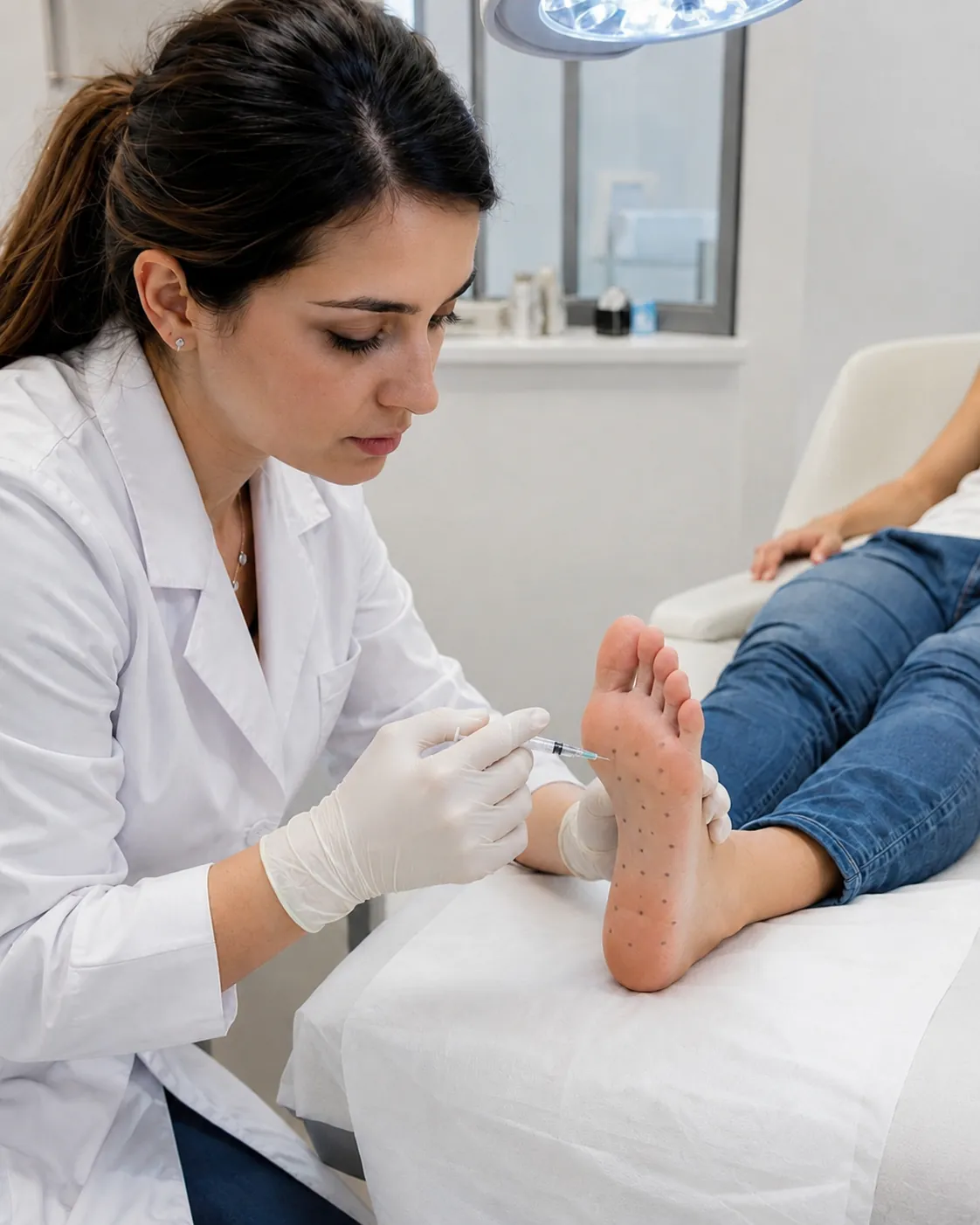
What is plantar hyperhidrosis and what are its causes?
Plantar hyperhidrosis is a chronic medical condition characterized by excessive, continuous, and uncontrolled production of sweat on the soles of the feet. This overactivity of the plantar eccrine sweat glands is triggered by dysfunctions of the sympathetic nervous system, independent of temperature.
Although often genetically associated with palmar hyperhidrosis, the location on the soles brings additional risks due to the closed environment in which it develops (shoes). Unlike normal exertional sweating, the affected feet are almost permanently wet, cold and have an increased fragility of the stratum corneum of the skin. The hyperactivity of the nervous system transmits constant impulses through the neurotransmitter called acetylcholine, causing the glands on the soles to secrete sweat continuously.
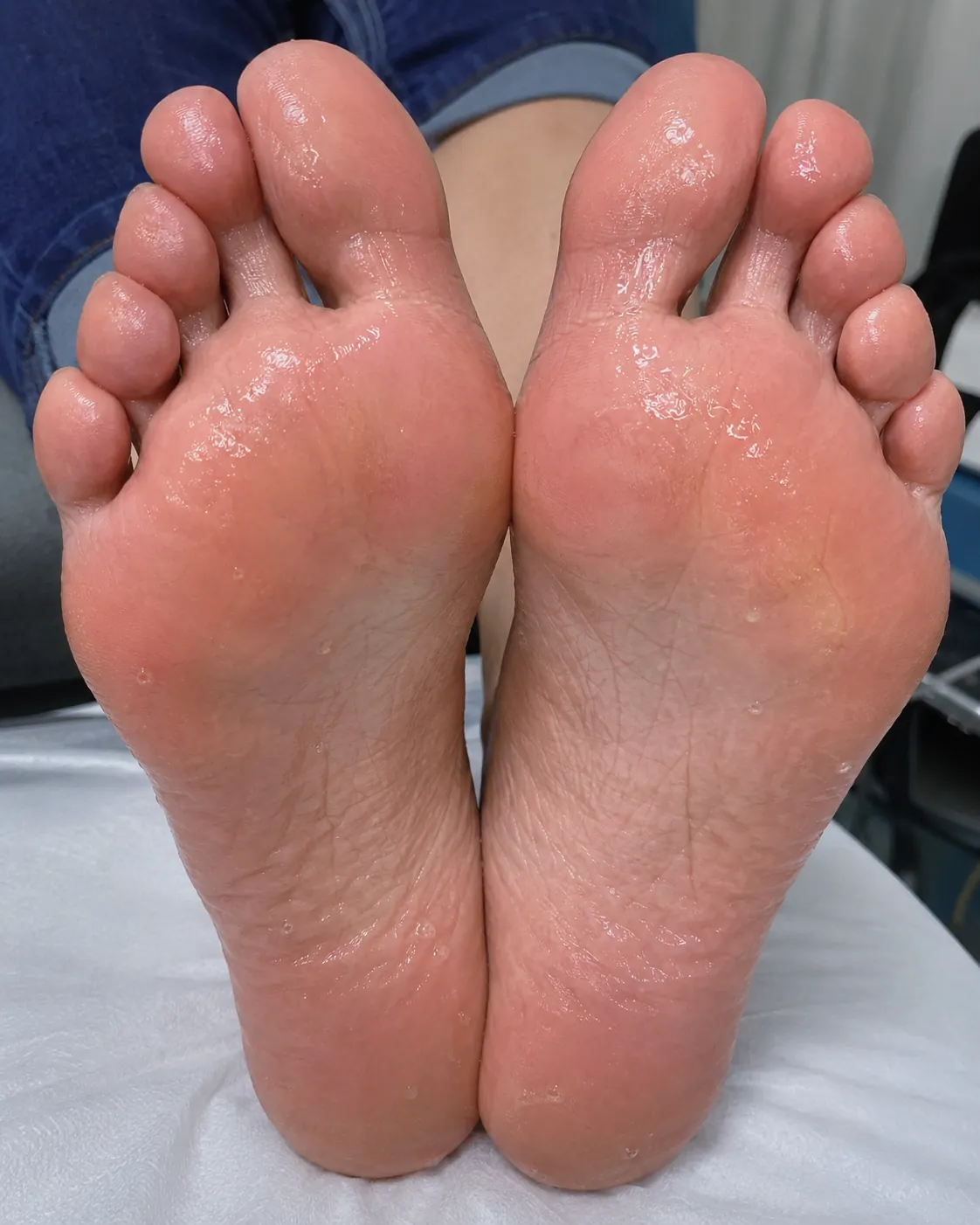
Self-assessment of the severity of foot sweating (Plantar HDSS Scale)
The diagnosis of plantar hyperhidrosis uses the HDSS Scale adapted for the feet, assessing the direct impact on mobility and quality of life. Determining the severity score guides the therapeutic conduct and the opportunity for botulinum toxin injection.
| HDSS score | Manifestations on the soles | Severity level | Recommended medical conduct |
|---|---|---|---|
| Score 1 | The soles are dry; sweating is not noticeable and does not affect walking or footwear at all. | Normal / Easy | It does not require medical intervention. |
| Score 2 | Soles are occasionally wet; discomfort is tolerable, but limits the choice of certain shoes. | Moderate | Topical solutions based on astringent salts or monitoring. |
| Score 3 | Feet are constantly wet; the condition is difficult to tolerate, quickly degrading shoes and socks. | Severe | Clear medical indication for botulinum toxin therapy. |
| Score 4 | The sweating is massive, dripping down the soles; the condition is intolerable, causing slipping and injuries. | Severe | Priority indication for neuro-glandular block by injection. |
Dermatological complications and the daily impact of wet feet
Complications of excessive foot sweating go beyond aesthetic discomfort, including maceration of the skin, recurrent fungal infections (athlete's foot) and bromhidrosis. Chronic moisture favors bacterial proliferation responsible for unpleasant odor and severe alteration of the skin barrier.
The warm, moist environment created inside shoes leads to maceration (whitening and softening of the skin on the soles), turning the skin into a gateway for bacteria and fungi. Patients often experience tinea pedis (athlete's foot) or bacterial infections such as punctate keratolysis.
In addition, the slipping of the foot in shoes (especially in sandals or high heels) turns simple walking into a risk factor for sprains or painful corns. The anxiety of taking off shoes during visits or in public spaces, due to the odor generated by bacteria (bromhidrosis), isolates patients socially.
How does botulinum toxin treat plantar hyperhidrosis?
Botulinum toxin treatment of plantar hyperhidrosis works by temporarily and specifically blocking the release of acetylcholine in the soles of the feet. This mechanism inhibits nerve stimulation of the eccrine sweat glands, eliminating excessive sweating of the feet in a safe and predictable manner.
Botulinum toxin type A injection therapy is the non-surgical gold standard for severe forms of localized hyperhidrosis. Injected strictly superficially into the dermis of the sole, the substance temporarily blocks the chemical receptors of the sweat nerves. Without the activation signal, the glands reduce their activity to a minimum level, restoring a perfectly dry texture to the soles. The procedure does not affect the sensitivity of the soles when walking, does not modify the neurological reflexes of the foot and does not interfere with the deep vascular structure.
Clinical injection protocol and management of foot pain
The skin on the sole is thick, but extremely rich in nociceptive (pain) receptors, which is why pain management is our absolute priority in the Bucharest clinic:
- Multi-modal anesthesia: We use a combined scheme, with the occlusive application of a high medical concentration anesthetic cream, associated with intense local cryotherapy techniques (controlled cooling of the skin) immediately before injection.
- Network injection: The dermatologist uses extremely fine needles, injecting tiny amounts of botulinum toxin at a distance of approximately 1-1.5 cm, covering the entire surface of the sole and the lateral edges, if necessary. The procedure takes about 30 minutes.
Evolution of results and duration of effect on the legs
Clinical results begin to become visible after the first 4-7 days, with the maximum effect occurring after two weeks. The duration of keeping the soles dry varies between 5 and 7 months, depending on the daily mechanical pressure.
The first days after the procedure
Glandular blockage gradually sets in. Patients notice a progressive reduction in humidity and the disappearance of the sensation of cold feet.
Day 14: Stabilization of the effect
The soles become completely dry. The skin restores its natural protective barrier, and the risk of infections or unpleasant odors decreases dramatically.
Durability of treatment
At the plantar level, the therapeutic effect is usually maintained between 5 and 7 months. The constant mechanical pressure exerted by walking and the increased cell renewal in the soles cause a slightly faster metabolism of the substance compared to the axillary area. For optimal results, it is recommended to repeat the procedure twice a year, preferably before the onset of the warm season.
Pre-procedure preparation: logistical recommendations
Preparation requires rigorous hygiene of the soles and removal of excessive layers of thickened skin. Patients should avoid applying creams on the day of injection and plan manual and dynamic rest immediately after leaving the clinic.
- Medical pedicure / skin cleansing: 48-72 hours before your visit, it is recommended to remove very thick layers of calluses (corns or dead skin) from your heels and soles. Extremely thick skin can prevent accurate assessment of the injection depth. However, avoid aggressive procedures that may leave open wounds.
- Cosmetic restrictions: On the morning of the treatment, wash your feet thoroughly and do not apply any cream, lotion, talcum powder or antiperspirant spray. The skin must be perfectly clean.
- Visit logistics: Come to the clinic wearing clean 100% cotton socks and very comfortable, airy shoes. Since the soles of your feet may experience a slight temporary numbness immediately after the injection, it is contraindicated to drive immediately after the procedure. Plan moderate dynamic rest for the rest of the day.
How is the cost of treatment for plantar hyperhidrosis determined?
The cost is calculated based on the standardized amount of botulinum toxin needed to cover both soles. Our clinic uses full premium protocols (100 units) to ensure clinical effectiveness and extended duration of effect.
- The importance of the full dose: the surface of the soles is significant and has dense skin. For effective and uniform blocking, the correct protocol uses a standard dose of 100 units (symmetrically distributed, 50 units for each sole).
- The rigor of the medical act: Plantar injection requires great anatomical precision to keep the substance strictly in the intradermal layer, avoiding the intrinsic muscles of the foot. The price reflects the use of original, safe products and the expertise of the injection specialist.
Frequently asked questions about foot sweat treatment
Will walking be painful or affected after the injection?
No, walking is not affected and is not painful. Immediately after the procedure, a slight sensation of local sensitivity or a small sensation of "air cushion" under the soles may persist, determined by the small volume of fluid injected intradermally. This effect disappears completely in the first 24-48 hours.
Does Botox treatment permanently cure foot odor?
Bad breath (bromhidrosis) is caused by the bacterial breakdown of sweat. By stopping the flow of sweat with botulinum toxin, you completely eliminate the moist environment in which bacteria thrive. As a result, the bad breath disappears as the substance takes effect.
What clothes and shoes should I wear after the procedure?
For the first 2-3 days, it is recommended to wear only socks made of natural fibers (cotton, bamboo), changed daily, and light shoes that do not constrict the foot and allow the skin to breathe. Avoid stiff shoes or synthetic materials that promote overheating during this short period.
Scientific resources and clinical studies on plantar treatment
The scientific validation of the treatment of plantar hyperhidrosis with botulinum toxin is based on clinical studies published in international databases. Research in PubMed confirms the safety of the method, the reduction of dermatological complications and the improvement of patients' mobility.
- Clinical study on optimal dosage and long-term efficacy on the soles: pubmed.ncbi.nlm.nih.gov/15569036
- Reduction of secondary infectious complications (maceration and Tinea Pedis): pubmed.ncbi.nlm.nih.gov/15569036
- Clinical management and dermatology of the foot affected by sweating: pubmed.ncbi.nlm.nih.gov/27215162

Restore the comfort of dry feet
To correctly assess your case and benefit from a personalized therapeutic plan, we invite you to a dermatological consultation at the Skina clinic in Bucharest.
Article medically reviewed by the team of dermatologists at Skina Clinic. The information is for informational purposes only and cannot replace a diagnosis established in the consultation office.